
Wine tasting on Lake Garda: a guide to the wine regions
Lugana, Valtènesi, Bardolino and Custoza: how Lake Garda's wine regions differ, and how to plan a day of tasting.
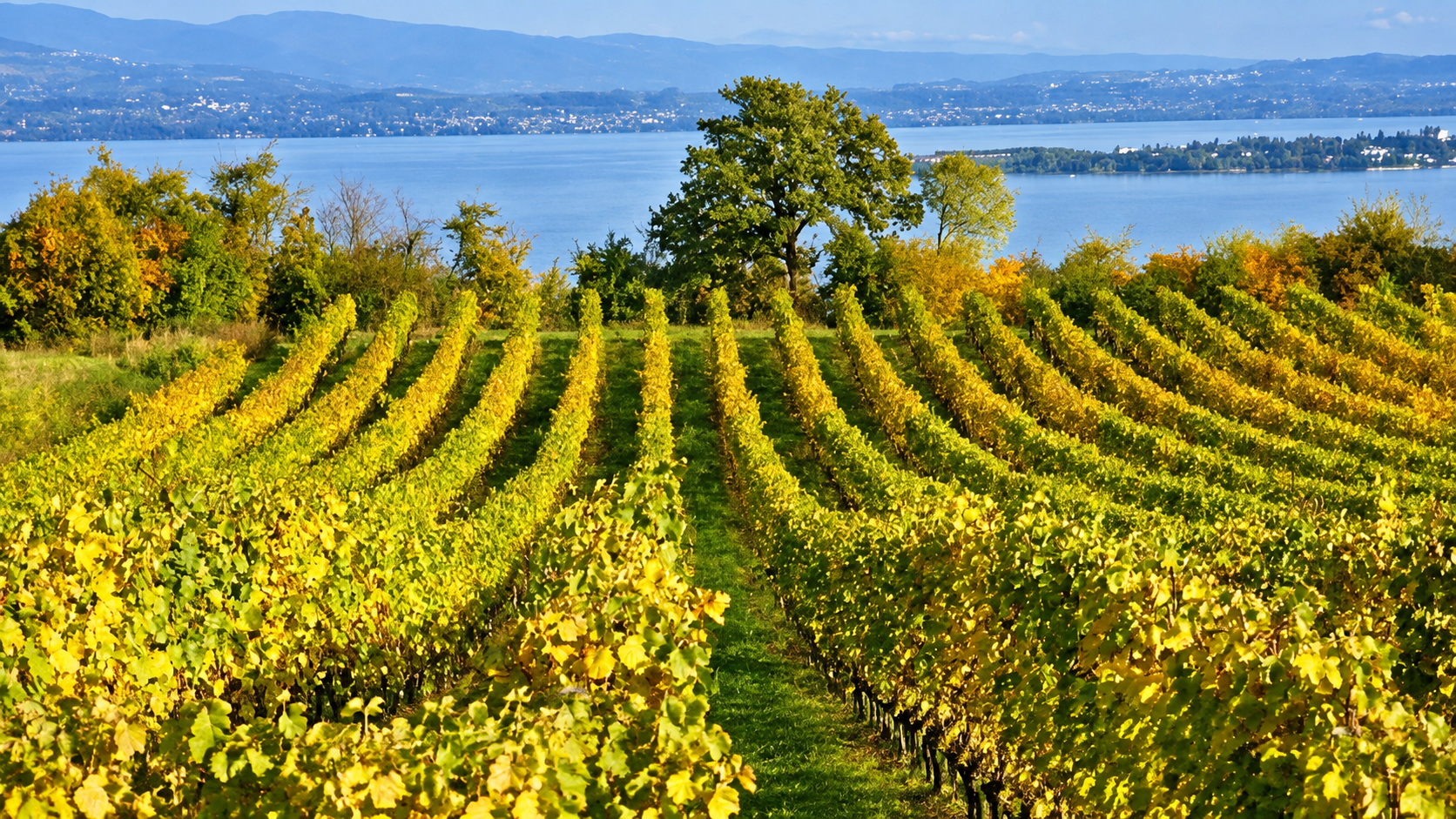
Lake Garda has four wine regions worth knowing before you book a tasting: Lugana around Sirmione and Desenzano on the southern shore, Valtènesi and its Chiaretto rosé along the Brescia riviera, Bardolino DOC on the Veneto side, and Custoza in the morainic hills toward Verona. Each has its own grape, soil and style, and visiting them properly takes more planning than a stop at a wine bar. This guide covers what sets the four regions apart, how a winery tasting actually works, and why September, harvest month, is the best time to go.
Lake Garda's wine regions at a glance
Wine has been made on both shores of the lake for centuries, but four appellations matter most to anyone planning a winery day trip from the southern end: Lugana, Valtènesi, Bardolino DOC and Custoza. The first two sit on the Lombardy and Brescia side, the other two on the Veronese side, and together they span a range from Lugana's mineral white to Chiaretto rosé to Custoza's softer white.
Knowing the difference before you set off helps you plan. With only one day, it makes more sense to focus on one or two neighbouring regions rather than chase all four in a few hours.
Lugana wine region: the white of the southern shore
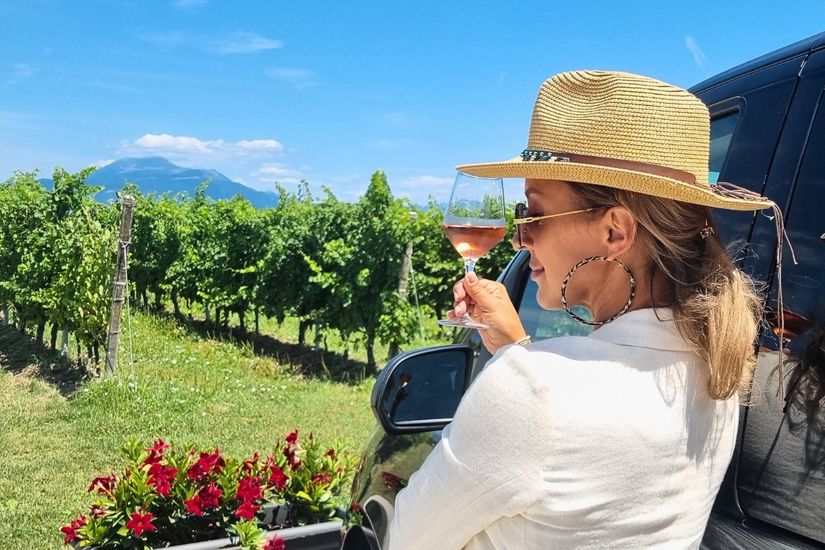
The Lugana DOC is the region closest to Desenzano and Sirmione, covering five towns: Sirmione, Desenzano del Garda, Pozzolengo and Lonato del Garda in Brescia province, plus Peschiera del Garda in Verona province. It is the only one of the four that straddles two regions, Lombardy and Veneto.
The grape is Turbiana, a close relative of Trebbiano di Soave with its own aromatic character: compact pyramid-shaped bunches, spherical berries with a thick skin. The soil matters a great deal here: layered clay of morainic and sedimentary origin, rich in minerals, hard to work when dry and heavy after rain. That combination produces wines with notes of almond and citrus, good acidity and a strong mineral edge.
The Lugana range runs from the base wine, fresh and floral with an almond note, to the more persistent and elegant Superiore, the more complex Riserva, and late-harvest and sparkling versions. The Lugana consortium also promotes wine tourism in the area, including the "Lugana on Foot" walking trail through the vineyards, recognised by the Council of Europe as a good practice in sustainable tourism.
Valtènesi rosé wine: the Brescia riviera
Moving up the western shore from Desenzano toward Salò, you enter Valtènesi: fourteen towns spread between hills and lakeshore, including Manerba del Garda, Moniga del Garda, Padenghe sul Garda, Polpenazze del Garda, San Felice del Benaco and Salò, plus parts of Lonato and Desenzano itself.
The base grape is Groppello, in its Gentile biotype, often vinified on its own. It defines both the region's red wine and, above all, its Chiaretto: a rosé made with a short skin maceration that leaves a bright pink colour and a fresh profile, lighter than the red it comes from. The Valtènesi consortium brings together around a hundred growers farming roughly 1,000 hectares, producing around two million bottles of Chiaretto a year - numbers that explain why almost every small and mid-sized winery here has its own rosé line.
Valtènesi is also the most rewarding region to explore with a driver: narrow roads through morainic hills, villages like Moniga and Polpenazze built tightly around a central square, and small family wineries with tasting rooms where the welcome feels different from a large estate.
Bardolino DOC wine: the Veneto shore
Cross the lake and you reach the Veronese side, where Bardolino DOC wine has been produced since 1968, with its consortium founded the following year - one of the earliest active wine consortiums in Italy. The production area is large, sixteen towns split between the classic zone (Affi, Bardolino, Garda, Lazise, Costermano sul Garda, Cavaion Veronese) and an extended zone further inland.
The red wine comes mainly from Corvina Veronese, up to 95% of the blend according to the consortium's production rules, rounded out with Rondinella. From the same grapes, with gentle pressing or a brief skin maceration, comes Chiaretto di Bardolino: the rosé symbol of the Veneto shore, bright in colour with a fresh, mineral profile.
Custoza white wine: the morainic hills
Set back a little from the lake itself, the Custoza DOC region spreads across nine towns in the morainic hills between the southern lake and Verona, with its consortium active since 1972. It is a white wine built from a blend of at least three native grapes: Garganega, Trebbiano, Trebbianello and Bianca Fernanda (a local clone of Cortese) are the main varieties, none of which can exceed 45% of the blend, while together they must make up at least 70%.
Custoza comes in three styles: the annata, or current-vintage wine (the most common, accounting for 60-70% of total production), Superiore and Riserva. Compared with Lugana it tends to be a softer wine, built for early drinking, and it is the least visited of the four regions - one more reason to look here if you want quieter wineries in high season.
How a winery tasting actually works
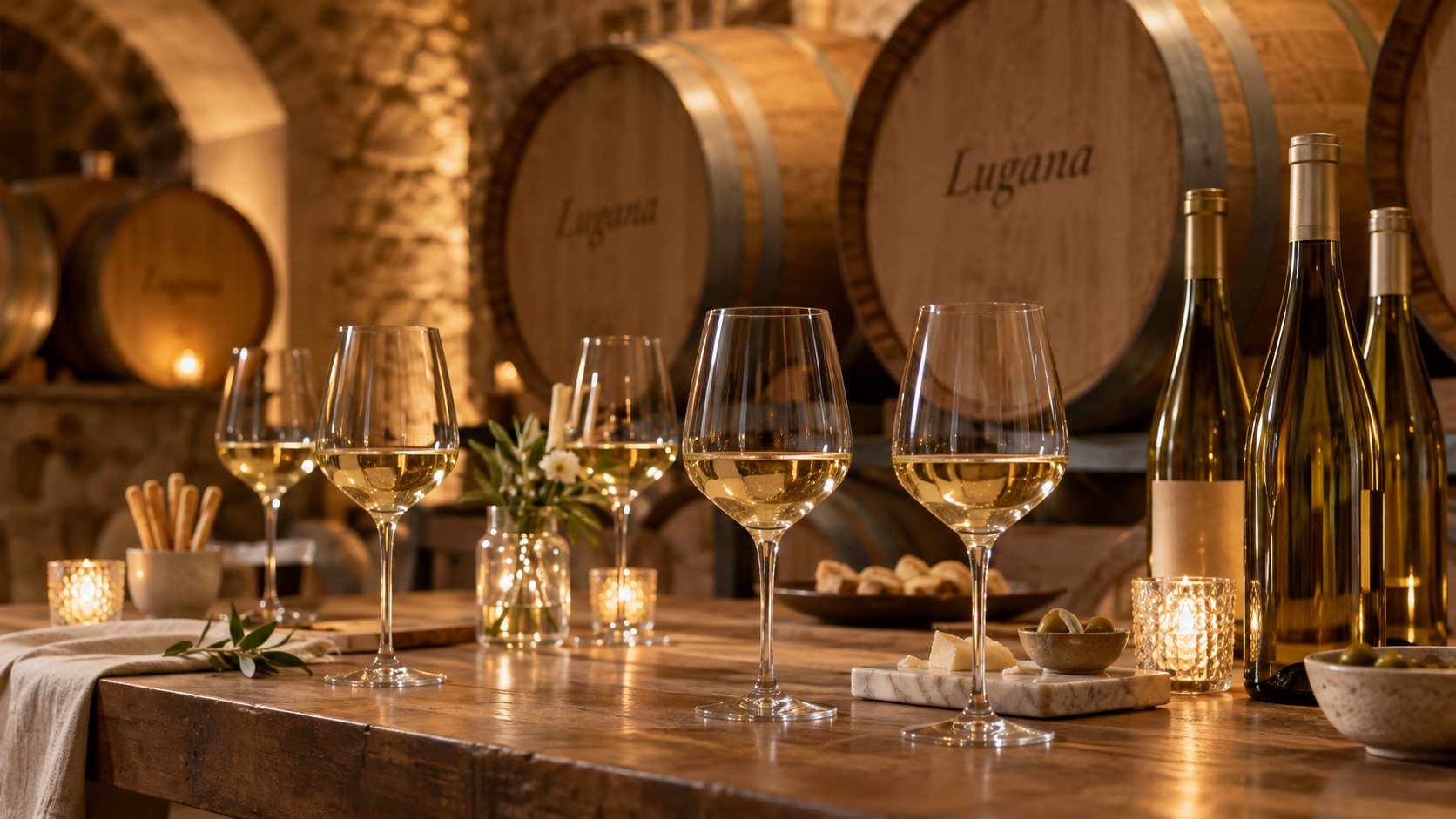
Anyone expecting to turn up at a winery unannounced and find someone ready to pour will often be disappointed, especially in high season. Most wineries in Lugana, Valtènesi and Bardolino work by appointment, for both individual tastings and groups. The small, family-run estates that are so common in Valtènesi tend to have limited staff: without a booking, you risk finding the tasting room closed or everyone tied up with harvest work.
The easiest time slots to get are late morning, between 10:30 and 12:30, and early afternoon around 3pm, ahead of the busier late-afternoon window that is often taken up by organised groups. Booking a few days ahead, particularly for September weekends, avoids having to switch to another winery at the last minute.
One practical tip for anyone wanting to cover more than one region in a day: Lugana and Valtènesi are close enough to fit two stops into a morning, while adding Bardolino or Custoza means crossing the lake, with real transfer time to factor in.
Grape harvest in September: the best time for a wine tasting trip
September is when the vineyard work becomes visible up close. In the Lugana area, the Turbiana harvest traditionally takes place in the last ten days of September into early October; in warmer years it can start around ten days earlier. The lake's other wine regions follow a similar calendar, with variations of a few days depending on the grape and the vineyard's exposure.
Visiting a winery during harvest means watching crates of grapes arrive straight from the vines - a stage of the process that stays invisible for the rest of the year. It is also the busiest period for wineries, which makes booking ahead in September essential if you want an unhurried visit. From late October it is the olive mills' turn: our guide to Lake Garda olive oil and its mills covers where to watch the pressing.
Getting to the wineries without worrying about who drives
The legal blood alcohol limit for driving in Italy is 0.5 grams per litre: above that threshold an administrative fine applies, above 0.8 g/l it becomes a criminal offence, and above 1.5 g/l the penalties are more serious, up to licence suspension. For newly qualified drivers, drivers under 21 and professional drivers the limit is zero. That, on top of simple convenience, is a good reason for anyone planning a multi-winery day - say, Lugana and Valtènesi, where the roads through the morainic hills are narrow and poorly lit after dark - to leave the driving to someone else.
A private driver also solves a second, more practical problem: over a day with three or four stops, the time spent hunting for parking in Valtènesi's small villages or along the narrow lanes linking one winery to the next adds up fast. With a tailored food and wine tour, the route between wineries is built around the regions you actually want to see, with no tasting skipped for fear of having to drive afterwards.
For anyone staying in Sirmione or Desenzano, the location is convenient because that is exactly where Lugana is made: a private transfer to Sirmione gets you to your hotel with a winery day already within easy reach the next morning, without needing to manage a rental car for a single outing. For a wider loop that also takes in Valtènesi or the Veneto shore, the tour around Lake Garda is built specifically to link several stops in one day.
For information and bookings, call +39 320 711 4543 or message on WhatsApp +39 320 444 3000, available every day.

Pronto per il tuo prossimo viaggio?
Prenota il tuo transfer e scopri il Lago di Garda con tutto il comfort che meriti.